Youth Mentorship Builds Community, Leadership and Civic Engagement
Community-centered learning and mentorship have long been a hallmark of Associate Professor of School Psychology Janise Parker’s research and scholarship, as highlighted in this 2023 feature on one of her local partnerships. That commitment is now being elevated institution wide as the university declares 2026 the Year of Civic Leadership. Parker’s ongoing work with the Youth Volunteer Corps of Hampton Roads (YVCHR) exemplifies how civic engagement can cultivate meaningful mentorship pipelines that support youth, empower student leaders and strengthen communities through sustained, reciprocal relationships.
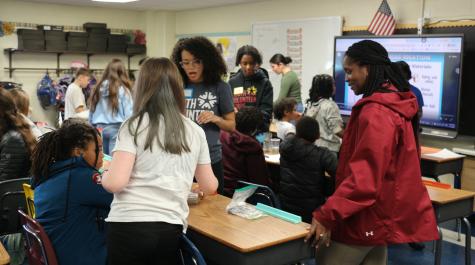
On a cold, blustery day in January, a group of Menchville High School students from YVCHR visited B.C. Charles Elementary School in Newport News to apply their new skills to their work with fifth graders. As part of YVCHR’s “Service through STEM,” these high school students have been working with Parker to develop their mentoring skills, explore what it means to be a mentor and carefully consider how they want to show up for their community.
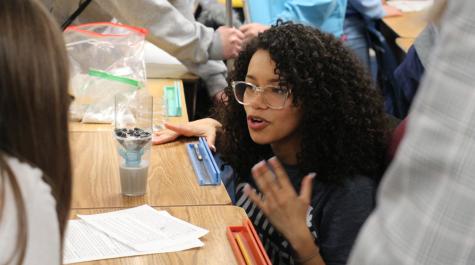
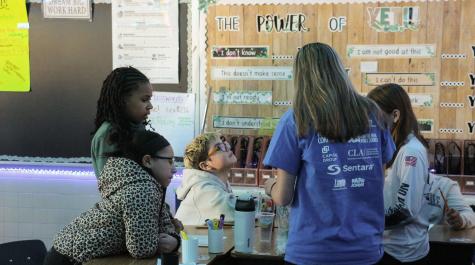
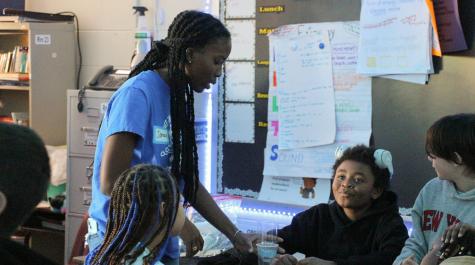
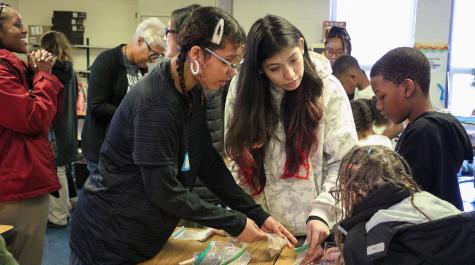
As soon as they entered the classrooms, it was clear how much the high school volunteers and fifth grade students enjoyed interacting with and learning from one another. Each classroom was abuzz with excitement from the students, the volunteers and the adult observers. The fifth-grade students eagerly asked questions and raised their hands to give answers. Parker’s training for the high schoolers includes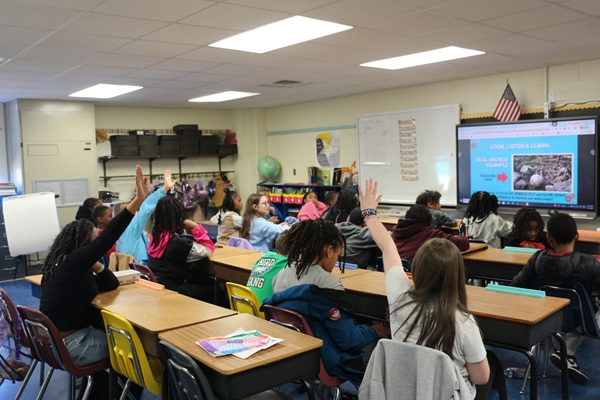 teaching them how to engage younger students, serve as a Near Peer role model and identify their mentees’ strengths by giving behavior-specific praise. The YVCHR volunteers had huge smiles on their faces as they taught the lesson and confidently shared behavior-specific feedback like, “I love how you raised your hand to answer,” or “That was a great response. I can tell you have been paying attention to what we have been learning today.”
During the lesson portion, volunteers were split among three classrooms working with groups of three-to-four students. They began with a science lesson focusing on pollution and how various pollutants impact the ecosystem, specifically waterways. After the lesson, the volunteers introduced a hands-on activity that entailed choosing various filter materials, such as gravel, fine sand or baking soda, to clean “polluted” water. The students started by planning out which filters they wanted to use, and they measured the Ph levels before and after filtering. Throughout this process, students were able to collaborate and solve problems with their classmates as well as with their high school mentors. The mentors watched and helped the fifth graders, guiding them through the exploratory lesson.
Parker’s primary goal is to help these young mentors learn how to speak to, teach and inspire mentees. Madison Mizelle, a senior at Menchville High School, said her perspective on working with children has changed based on her experience with YVCHR and Parker.
“I learned how easy it is to connect with the kids and just communicate with them in general. It’s not intimidating when you’re actually doing it,” she said.
Senior high school student and future William & Mary student Anh Thu Phan Huaracha shared how this experience is particularly meaningful to her: “I feel like I’m giving back to the community I’m grateful for … and I want to be an inspiration to the new generation.”
A third high school student, Autumn Price, explained that working with YVCHR and Parker helped to contribute towards a positive change in her perspective.
“I really want to be in a leadership position. I learned how to just dwell in the learning process. I don’t have to have the spotlight all the time,” said Price. “This process really helped me to learn how to depend on your teammates.”
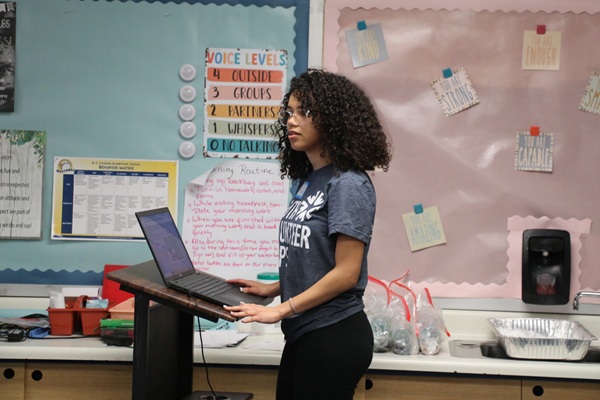 In addition to guiding the high school students as mentors, Parker also puts a great deal of emphasis on supporting them as mentees, to help them as they prepare to embark on their own journeys. Her mentorship includes encouraging introspection and advising them about how their interests and talents can prepare them for future careers.
“I see it as a potential avenue for helping high school students to be exposed to various career pathways, such as teaching, child mental health and community program development. I hope that they take something away from this experience as well,” Parker said.
The importance of positive mentor/mentee relationships, said Parker, can make all the difference for some students.
“Mentorship is a form of preventative mental health support,” she added. “Not everyone will need intensive therapeutic service, and for some people having a connection to a positive role model, someone who sees and values them, can be sufficient. I hope that my work with the students as a partner with YVCHR will continue to inspire them as adults,” said Parker.
Parker plans to continue mentoring future high school students. She also hopes that as her partnership grows, more William & Mary students will participate and provide mentorship for the high schoolers, as well.
As William & Mary looks toward 2026 as the Year of Civic Leadership, initiatives like Parker’s mentorship work with YVCHR underscore what that declaration represents in practice: long-term investment, shared learning and community transformation that begins well before students arrive on campus. By equipping high school mentors with the skills to support younger students academically, socially and emotionally, Parker’s work bridges education, mental health and civic responsibility. These experiences not only benefit fifth graders and their mentors today but also model how future William & Mary students can engage as thoughtful, service-minded leaders.