In its fifth year, Camp EAGER again breaks attendance records
This summer marked the fifth year of Camp EAGER and another step in expanding its impact. Developed by researchers at the William & Mary School of Education, the experiential summer camp explores innovative ways to encourage students from underrepresented groups to consider STEM careers. The acronym EAGER stands for Elevate engineering, Advance innovation, Guide Learning, Effect change and Remove barriers for all. Camp EAGER is led by Pavey Family Co-Chair in Instructional Technology and Professor of Science Education Meredith Kier and Pavey Family Co-Chair in Instructional Technology and Associate Professor of English Education Lindy Johnson.
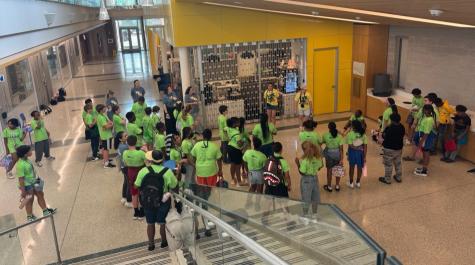
Initially launched in 2021 with 40 students, the program has grown significantly each year. Last year, it served approximately 500 participants, and this year the team welcomed 700 students ranging from rising third-graders to rising 10th-graders. In addition to serving K-12 students, the camp offers an immersive, field-based experience for student teachers-in-training with projects including coding, robotics, city planning and drone camp. A total of 16 master's-level preservice teachers from the School of Education gained hands-on classroom experience. 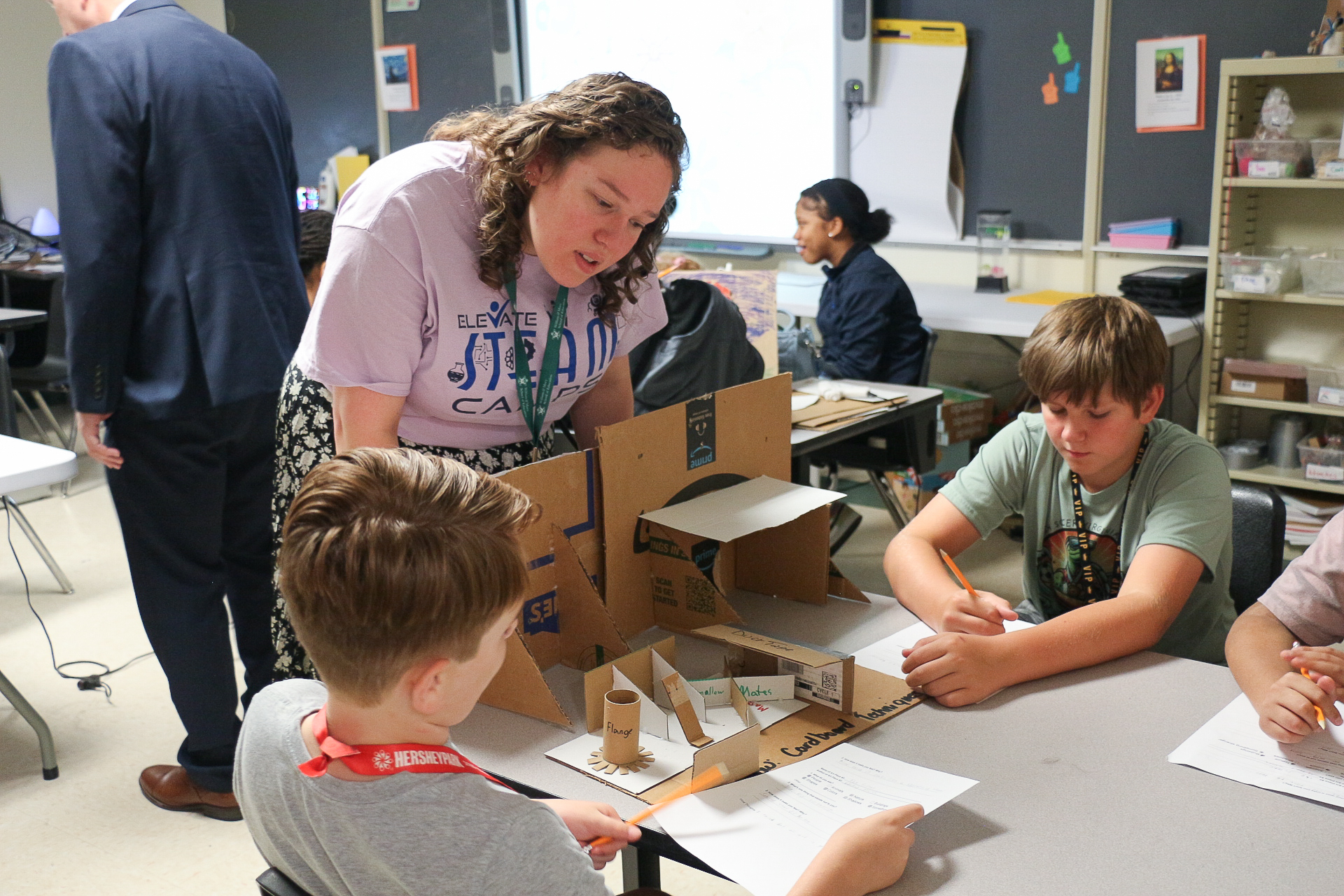
Kier elaborates on student teachers’ experience: “Over the course of a month, these students participated in introductory coursework with Dr. Johnson and me while also spending seven intense days at camp,” she said. “We focused on teaching them high-leverage practices designed to engage campers, collaborate with colleagues, and provide constructive feedback. The power of this experience lay in the fact that our preservice teachers were able to immediately apply these strategies.”
At the close of the camp, the professors invited the preservice teachers to reflect on how the camp experience helped shape their vision of who they hoped to become as educators.
Gabby Martinez, a student in secondary science, shared her thoughts: “If I hadn’t had this chance to practice these skills before my residency, I’m not sure I would have been as effective with them, or if they would have come to me as naturally in the future. The camp classroom created a nice, low-stakes environment with high expectations, which allowed mistakes to have a ‘fail-safe [option].’ We simply moved forward. It was refreshing to get a snapshot of the summer camp setting again, practice fostering a positive learning environment through relationship-building, and connect with students using quick, non-intrusive questions.”
In addition to the preservice teachers, four William & Mary undergraduates were recruited as paid interns, inspiring their interest in teaching by providing them with an opportunity to work with high school students in STEM.
“These students left camp feeling motivated to pursue teaching themselves,” said Kier.
Throughout the camp, all William & Mary students were paired with 20 Newport News Public Schools teachers.
“Working alongside experienced Newport News teachers, our students mentored and co-taught, guiding small groups of campers through activities in coding, robotics and engineering,” Kier continued. “In collaboration with William & Mary’s Office of Undergraduate Admission, we also organized a campus visit for 200 middle school students, offering them a taste of college life and a look at what their future could hold.”
Giving campers the opportunity to see themselves on a college campus has been part of Kier’s mission from the start.
By fostering hands-on learning experiences for campers, the program exemplifies the School of Education’s commitment to delivering programs that serve the Commonwealth and building strong and just institutions. Through strategic partnerships with local school districts, Camp EAGER continues to advance the university’s goals of expanding William & Mary’s impact and reach, as outlined in outlined in Vision 2026.