
Across time zones, currencies and continents: Glory Munthali receives Margaret, The Lady Thatcher, Award
For generations, Glory Munthali’s family has worked as farmers. Growing up in Malawi, a landlocked country in southeastern Africa where agriculture remains a cornerstone of the economy, her future could have been largely predetermined. Yet from an early age, Munthali’s father envisioned a different path for his eldest daughter.
In a society where educational opportunities for girls and women are not guaranteed, her father’s support proved transformative. Although her family farmed for a living, he noticed her remarkable intellect and made a deliberate decision that his daughter would pursue education instead.
“He never let me work on the family farm a day in my life,” Munthali recalled. Instead, he enrolled her in some of the best schools available, encouraged her intellectual curiosity and exposed her to examples of women succeeding in leadership roles. He shared international news, introduced her to prominent female figures and challenged her to think beyond the limitations others might place upon her.
As a child, she remembers seeing former United States Secretary of State Condoleezza Rice on BBC News and having a teacher who had just returned from earning her Ph.D. in Italy. Moments like these planted seeds of possibility in her mind.
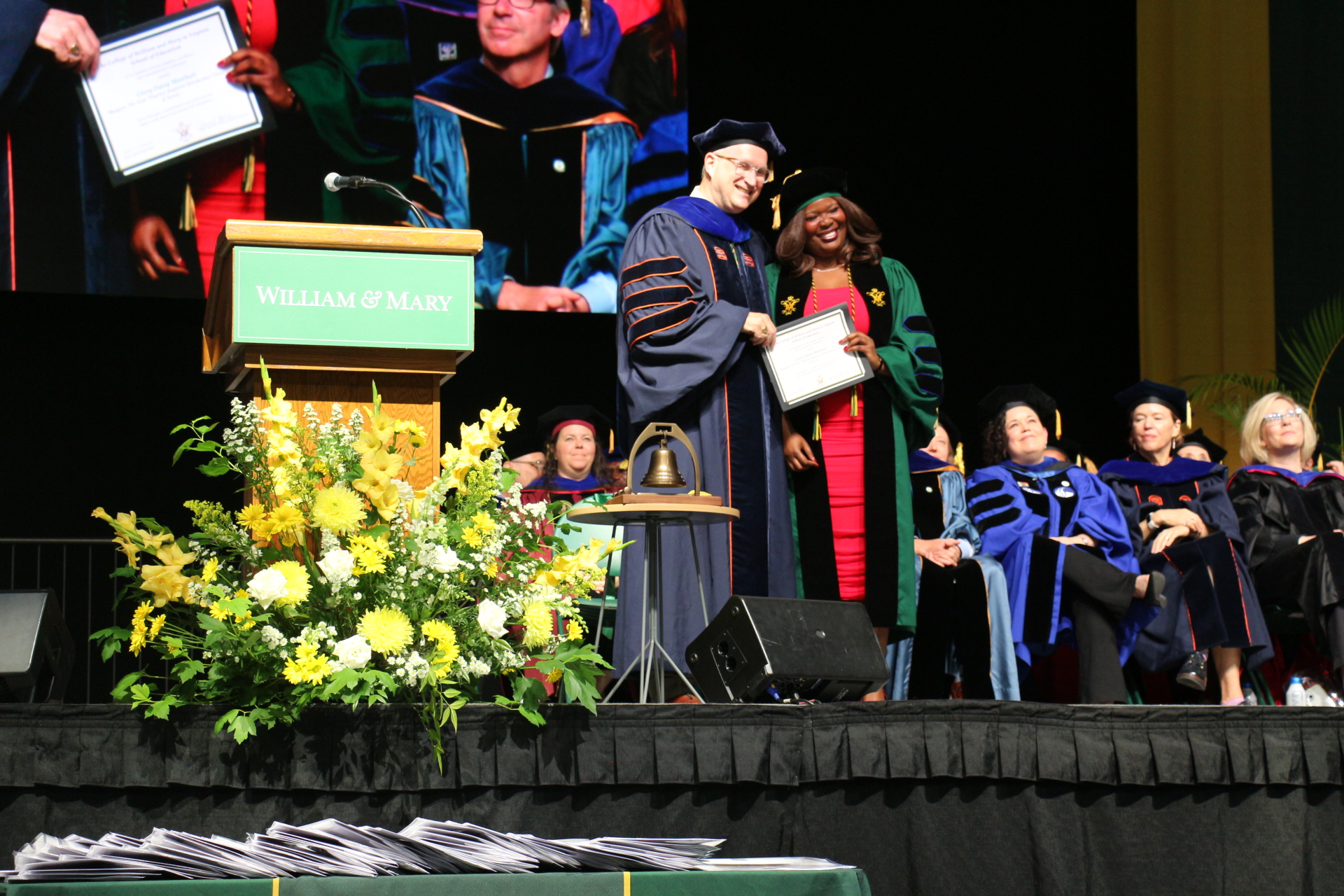
Today, Glory Munthali Ph.D. ’26 is an award-winning scholar, researcher and counselor educator. At the School of Education’s graduation celebration, she was recognized with the William & Mary School of Education’s Margaret, The Lady Thatcher, Award for Scholarship, Character and Service, the school’s highest honor for graduate students.
In her acceptance speech, she invited her fellow graduates to reflect on the hard work and perseverance that brought them to this point.
“Some of us are the first in our families to do this. And if you’re like me, the first woman in your entire lineage to earn an advanced degree. Some of us carried generations on our backs,” she said. The achievement is an extremely important part of her identity and would not have been possible without her family’s support. 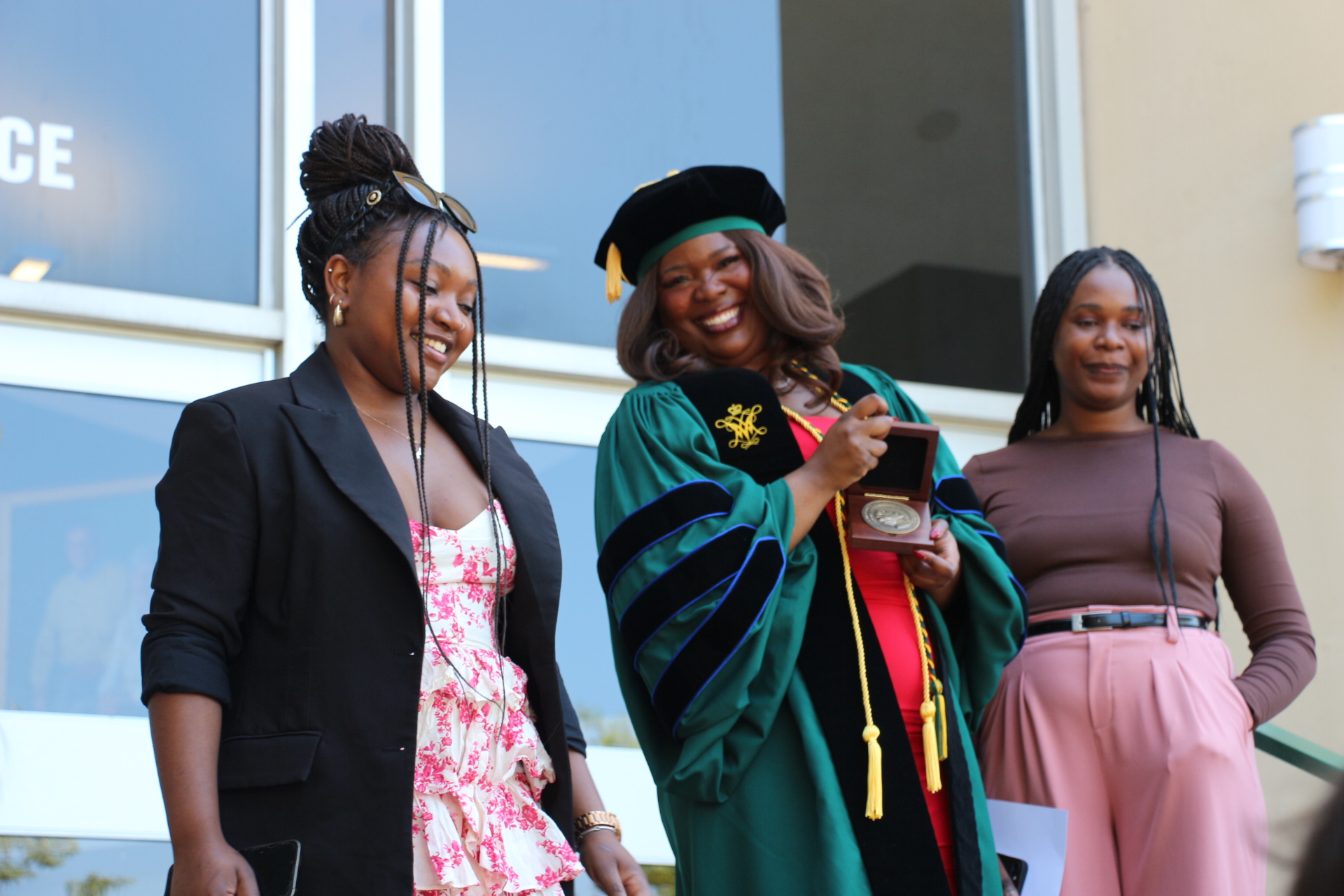
“Some of you moved your children into dorms, some of you moved us across time zones and currencies and continents. To my family specifically, who did not just help me pack, but let me go to an entirely different continent, thank you for not talking me out of it.”
When Munthali arrived in the United States in 2018 to pursue a master’s degree in nonprofit leadership, she had already spent years leading a nonprofit organization in Malawi. That effort began as an after-school program and expanded to include a high school. The work exposed her to the complex realities facing communities and families.
While studying organizational leadership, however, she began to realize that structural solutions alone could not address every challenge she encountered.
“I felt like something was missing,” she said. “When I described what I was learning, one of my professors said, ‘What you’re describing is trauma-informed counseling.’”
This realization changed the trajectory of her career. She went on to earn a second master’s degree in Community and Trauma Counseling. One of her professors in this program, Katharine Sperandio M.Ed. ’14, Ph.D. ’19, encouraged Munthali to apply to the William & Mary School of Education’s Counselor Education program because of its emphasis on trauma-informed practice.
Since arriving at William & Mary, Munthali has built an impressive record of scholarship focused on trauma-informed, culturally responsive counseling and substance use recovery. She has presented her research at state and national conferences, including the Law and Ethics in Counseling Conference, the American Mental Health Counseling Association Conference and the Virginia Association for Counselor Education and Supervision Conference.
She has authored one peer-reviewed publication and has four additional manuscripts currently under review.
Her accomplishments have earned recognition beyond William & Mary. In 2025, she received the American Mental Health Counseling Association’s Donald Matteson Outstanding Student Award, honoring students who demonstrate academic excellence, professional leadership and commitment to the counseling profession. She was also selected as an Emerging Leader by the North Atlantic Region Association for Counselor Education and Supervision and received scholarships from multiple professional organizations.
When Munthali reflects on her success, she consistently points to the mentors who supported her along the way.
Among them, she credits dissertation chair Professor Spencer Niles with helping her navigate both the academic and personal challenges of doctoral study.
During one particularly uncertain moment, she remembers telling him, “I don’t know how to do this.” His response was simple and based on what he had been told as a beginning doctoral student: “Don’t worry,” he said. “I will teach you.”
Niles established regular biweekly meetings, provided timely feedback and helped keep her focused on her goals. Other faculty members, including her dissertation committee members, Professors Rick Gressard and Yoon Suh Moh, and faculty member Olivia Uwamahoro, clinical assistant professor, also played significant roles in her development as a scholar and educator. She successfully completed the degree in three years.
“The Ph.D. process humbled me,” she said. “It changed me as a person.” Receiving the Thatcher Award provided meaningful validation at the culmination of that journey.
“It showed me that the work mattered,” she said.
Advice that her father shared with her in 2018 just before she left for the United States has become a guiding principle throughout her academic journey.
“For you, my daughter, being strong and courageous will not be optional,” he told her. “Because as you navigate the foreign land you’re heading to, you will not have the luxury of choosing whether or not to have courage.”
This sentiment holds true as she enters the profession and prepares to train the next generation of clinicians and counselor educators.
“This degree is not a destination. It is a responsibility,” she told graduates. “We’re entering a world that is hurting. A world that desperately needs courageous counselor educators, teachers, researchers and leaders — people who are culturally humble, trauma-informed, globally minded and brave enough to challenge broken systems. And we are the right people for that work.”